

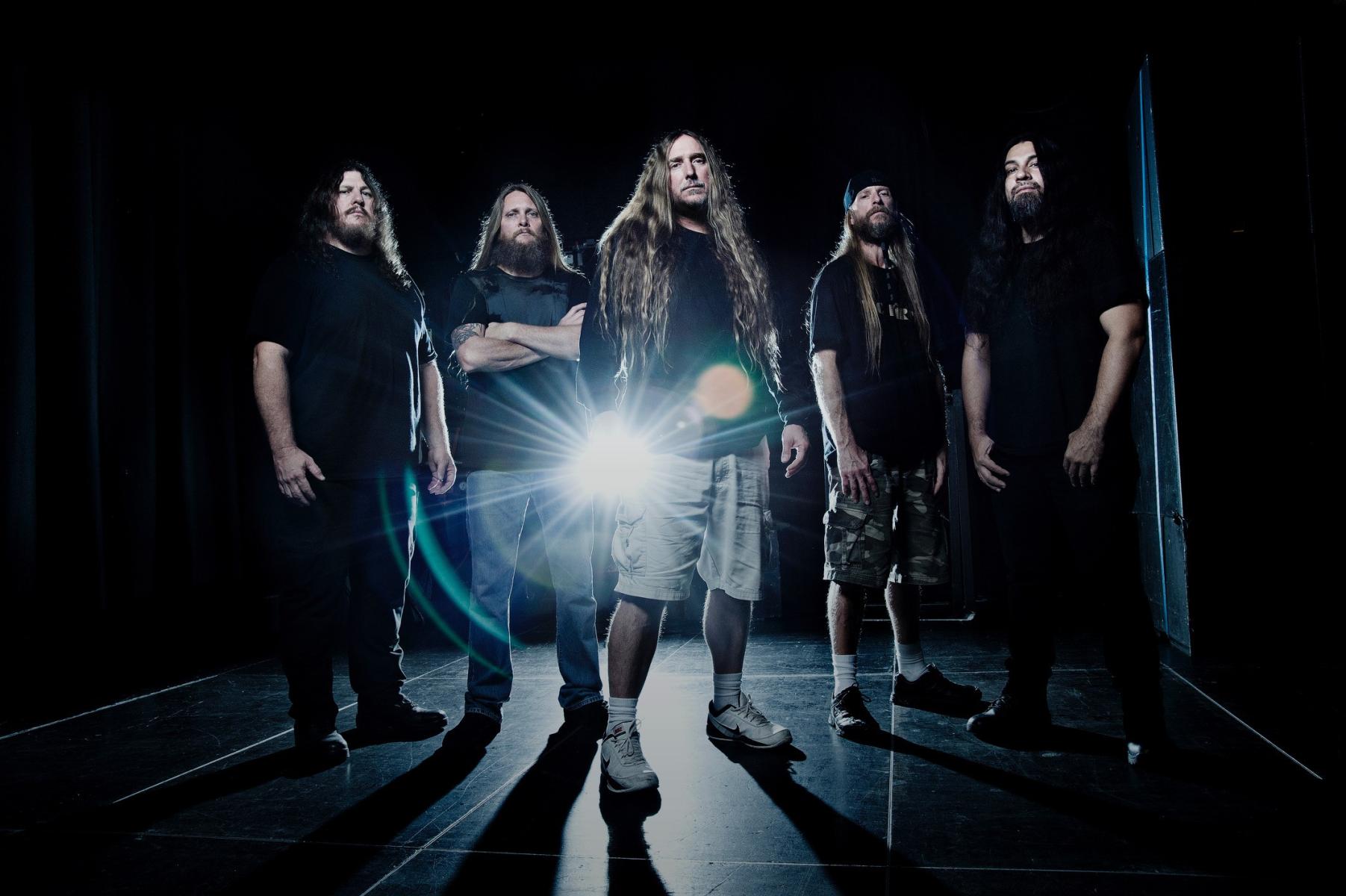
Obituary: Out of the Swamp
"We’re doingwhat we’re having a good time doing. And if we don’t have a good time doing it, we’ll find something else to do.”
So bespoke Obituary drummer Donald Tardy, in a 2023 interview withInvisible Oranges, echoed the sentiments of his brother and Obituary vocalist, John Tardy. The quote perfectly captures Obituary: At its core, being in Obituary is fun. John, Donald, alongside co-founding rhythm guitarist Trevor Peres and crucial late-career additions Terry Butler (bass) and Kenny Andrews (lead guitar), have forged a 40-year career doing what they love, which is playing death metal. It isas simpleas that. The band doesn’t chase accoladesorsocial media adulation. AndObituary truly doesn’t care about the latest trends. Instead, across 11 studio albums and countless live shows, Obituary has steadfastly stuck to its guns, playing some of the heaviest music known to man and accumulating a loyal fanbase worldwide.
Obituarylaunched in 1984as Executioner. Influenced by localTampa, Floridaheroes NastySavage and Savatage, as well as the nascent thrashers Metallica andSlayer, Executionerhonedtheir craft via a dedicated practice routine in the Tardys garage, which was soonbrought to live stages. While some of the members of Executioner were well belowthedrinking age, their liveshows—complete withdrum risers, smoke bombs andurns—displayed analready matureunitthatunderstood the value of presentation.
The band (also featuring lead guitarist Jerry Tidwell and bassist Jerome Grable) trekked later in 1984 to Tampa’s famed Morrisound Recording to track its thrash-inspired two-song Metal Up Your Ass debut demo. Shortly after that, two moments occurred that would forever change the band’s career: Peres discovered Celtic Frost and Hellhammer, helping him shape his guitar tone, and John Tardy discovered his iconic death metal voice. Combined with Donald Tardy’s innate rhythmic ability and new lead guitarist Allen West’s solos, Obituary had forged its sound.
After catching wind of another outfit named“Executioner,”a name change to“Xecutioner”wasin order. It was followed by the band’s inclusion in the pivotal 1987 Raging Death compilation. Word quickly circulated through the metal underground of Xecutioner’s unrestrained heaviness,particularly John Tardy’s vocals. For many, it was unlike anything they’d ever heard. Now armed with eight songs, new bassist Daniel Tucker, and eying an eventual record deal, Xecutioner re-entered Morrisound Recording with producer/engineer Rick Miller to track their Slowly We Rot debut in 1988. However, an accident forced Miller to leave the sessions, putting Xecutioner in the hands of the fledgling producer/engineer Scott Burns, who quickly bonded with the members of the band.
A deal with Dutch label Roadrunner Records was signed in late 1988, coinciding with a name change to Obituary. Slowly We Rot was unleashed upon unsuspecting ears in May 1989. The sheer brutality of it all—from Peres and West’s subterranean riffs to John Tardy’s rabid, indecipherable bellows—was an immediate revelation in death metal circles. Never before had a band sounded this extreme while having the songs to back it all up. Flanked by promotional shots that obscured the band’s faces (courtesy of a back-alley photo shoot in Ybor City byTampa scene photographer Tim Hubbard), Obituary quickly became one of the most talked-about names in the death metal underground, with fans and journalists alike taking their turnstrying to decipher John Tardy’s lyrics(he never used a lyric sheet)while trying to put a face tothe band. (Obituary’s live appearances were limited at this time.) The impact of Slowly We Rot is immeasurable; it remains a standard-bearer for extremityand one of death metal’s mostimpactful debuts.
Cause of Death arrived a year later, this time with James Murphy stepping in for Allen West in the lead guitar spot and Frank Watkins assuming the bass position for Daniel Tucker.WhileMurphy’sclassically inspiredsolos added a new dimension to Obituary’s sound, Peres andDonald Tardycarriednearly the full songwriting load, assembling a batch of cuts that wouldremain live set mainstays, “Chopped in Half,” “Dying” and “Turned Inside Out.”Obituary’s firstU.S. tour followed the release of Cause of Death, including an appearance on the legendary“S.O.S.” bill alongside headliners Sepultura and opening act Sadus.
Behind themomentumofCause of Death, Obituary’s third studio album,The End Complete,arrived two years later. Once again partnering with Scott Burnsand West returning to his leadguitar spot,The End Complete’s raw and natural production values highlighted songs that werenow fullyenmeshedin groove, as signified bytheopening cut “I’m in Pain” as well as the titletrack, which also received music video treatment and heavy rotation on MTV’s Headbanger’sBall.The album eventually reached 150,000 units in sales, making it one of the highest-sellingdeath metal albums of all time.
Obituary’s fourth studio album,1994’sWorld Demise, arrived at a timewhen death metalbecame oversaturated and outfits such as Machine Head, Pantera and Sepultura ruled the day.Obituary, however, used it as an opportunity to diversify its sound.Peres, Donald Tardy andMorrisound Recording engineer“Super”Brian Benscoterincorporated a myriad of industrialeffects toadd a newangleto Obituary. Combined with John Tardy’s harsh lyrical take oncorporations plundering the world for their greed,World Demisestands alone as Obituary’s mostadventurous album.
With Burns approaching retirement from studio work, Obituary tapped Madball producer JamieLocke forBack from the Dead, the band’s fifth studio album. Recorded at Miami’s legendaryCriteria Studios,Back from the Deadhoused some of the band’s most groove-oriented material,such as“By the Light,” “Download”and“Lockdown.”
In 1998, the members of Obituary decided to take a much-deserved break to focus on theirfamilies and other projects.Peres started Catastrophicand releasedThe Cleansingstudio albumin 2001.Donald Tardyjoinedover-the-top rocker Andrew W.K.’s band, whose major label debut,I Get Wet,spawned several hit singles, affording Donald the opportunity toperform onSaturdayNight Liveas well as the 2002 installment of Ozzfest, where an impromptu reunion with Donald,John and Trevor set the stage for the band’s 2003reactivation.
Obituary’sfirst album in eight years,Frozen in Time,arrived in 2005, followed by aswitchinrecord companiesto Candlelight Recordsand the addition of new lead guitarist Ralph Santolla in2007. Thechangessignified a new era for Obituary, prompting theXecutioner’s Returnalbum title for the band’s sixth studio effort.The album also marked another drastic change for Obituary: the band built its own studio with a Pro Tools rig on John Tardy’s property, enabling them to record at all hours of the day.The process helped shape the band’s next album, Darkest Day, which arrived two years later and highlighted Santolla’s elaborate, Michael Schenker-inspired guitar solos.
Bassist Terry Butler(formerly of Death, Massacre, and Six Feet Under)joined Obituary in 2010,a long overdueeventconsideringhe has been one of the band’s closest friends since theirformation.AndSantolla (who passed away in 2018) was replaced by Andrew W.K. guitar tech Kenny Andrews in 2012, stabilizing Obituary’s lineup. Behind a crowdfunding effort and a new deal with Relapse Records, Inked in Blood was released in 2014. It was immediately hailed by fans and critics as one of Obituary’s finest efforts in years, propelled by a heavy touring cycle.
Simply titled Obituary, the band’s tenth studio album was released during a death metal renaissance. A new wave of fans began discovering bands like Obituary, while old standbys were reminded of the band’s greatness through cuts like “Brave” and “Sentence Day.”A marquee spot on Slayer’s European tour ensued, where the sound of Peres’s ungodly guitar tone melted arenas across the continent.
The 2020 COVID pandemic took Obituary and their peers off the road. The band made the most ofits downtime with a series of livestreams that gave fans the opportunity to hear classic albums infull and deep cuts that are rarely performedlive. Along the way, Obituary kept writing newmaterial, culminating withDying of Everything, which, once again, was recorded at the band’sown RedNeck Studios in Gibsonton, Florida, and produced and mixed by Joe Cincotta, with engineering credits yet again falling to Mark Prator, a longtime friend of the band.
Dying of Everything, as one would surmise, is everything one would expect from Obituary. From the thrashy “Barely Alive” to the all-out stomp of “The Wrong Time” and the innate groove of “My Will to Live,” Dying of Everything is Obituary at its finest, fitting for a band that has defied age, expectations, and shifting musical tastes.
Obituary is built upon brotherhood, friendship and music—threeunbreakable bonds. From the garages of Brandon, Florida, to the big festival stages of Europe and beyond, Obituary has never lost sight of what matters: a prime recipe for longevity.
“I love the idea of creating music for people that are not in my town or not even in my state orcountry, that isnot just waiting for us but rooting us on,”Donald told me in 2023.“It's biggerthan us. Obituary is part of people's lives.”
David E. Gehlke December 2023


